cha mono

  1. Home
  2. /
  3. About
  4. /
  5. The CHA Council

The CHA Council

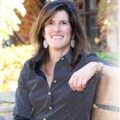
Neilesh.Bose_.2020-scaled

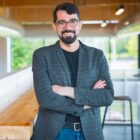
Neilesh Bose

2024-2027
Profile
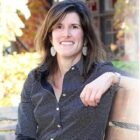
Neilesh.Bose_.2020-scaled

Neilesh Bose

2024-2027

Neilesh is Associate Professor of History and Canada Research Chair of Global and Comparative History at the University of Victoria.  He has also served as a visiting professor at Ashoka University and Queens College in New York City. His research interests include modern religion and secularism, the history of colonial India, and the history of early post-colonial South Asia with specialization in West Bengal and Bangladesh. His book Recasting the Region: Language, Culture, and Islam in Bengal (Delhi and Oxford, 2014) explores late colonial and early postcolonial histories of East Bengal and Bangladesh. As a historian invested in global and comparative history, his publications include a special edition in the Journal of World History, and the edited volumes India after World History: Literature, Comparison, and Approaches to Globalization (Leiden and Delhi, 2022) and South Asian Migrations in Global History: Labor, Law, and Wayward Lives (London, 2020). His journal articles on topics such as religion, race, and migration appear in Modern Asian StudiesSouth Asia Research, and the Journal of the American Academy of Religion.

Portfolio: Advocacy

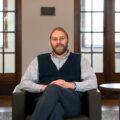
Musée canadien de l’histoire, Artefacts = Canadian Museum of History, Artefacts

Olivier Côté

2024-2027
Profile
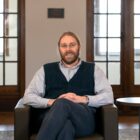
Musée canadien de l’histoire, Artefacts = Canadian Museum of History, Artefacts

Olivier Côté

2024-2027

Since 2015, I’ve been working as a historian at the Canadian Museum of History, as Curator of Media and Communications. With a PhD in history from Université Laval and a master’s degree from York University, I founded HistoireEngagee.ca, the French-language counterpart to ActiveHistory magazine, in 2009. At the time, I was its general coordinator. In 2014, I published the book Construire la nation au petit écran (Septentrion), a finalist for the 2016 Canada Prize in the Social Sciences. I recently worked on the exhibition From Pepinot to Paw Patrol – Television of Our childhoods and on the publication of its catalog. I’m currently doing research on children’s programming and the representation of diversity.

As a member of the Board of Directors of the Canadian Historical Association, I would like to build bridges between French and English-speaking researchers, as well as between those working in and out of universities, especially in museums.

Portfolios: Scholarly, Ferguson, and Fecteau Prizes

Screenshot

Whitney Wood

2024-2027
Profile
Screenshot

Whitney Wood

2024-2027

Whitney Wood is Canada Research Chair in the Historical Dimensions of Women’s Health at Vancouver Island University in Nanaimo, BC. After completing undergraduate and MA work at Lakehead University, she earned a PhD in History from Wilfrid Laurier University (Tri-University Graduate Program), and held postdoctoral fellowships at Birkbeck, University of London, and the University of Calgary before joining VIU in 2019. Wood’s research explores histories of health, gender, and the body in modern Canada, focusing on reproduction, obstetrics, gynecology, and cultural and medical representations of pain. Her work has appeared in the Canadian Historical ReviewSocial History of Medicine, and Canadian Bulletin of Medical History, in addition to a number of edited collections including Medicare’s Histories: Origins, Omissions, and Opportunities in Canada (University of Manitoba Press, 2022) and Feeling Feminism: Activism, Affect, and Canada’s Second Wave (University of British Columbia Press, 2022). Wood is currently working on her first book, Birth Pangs: Maternity, Medicine, and Feminine Delicacy in English Canada, 1867-1940, and serves as English-language editor for the Canadian Journal of Health History.

Portfolios: Liaison with History Department Chairs and CHA Affiliated Committees

Alison Norman

Alison Norman

2025-2028
Profile
Alison Norman

Alison Norman

2025-2028

Alison Norman is a historian working for the federal government, at Crown-Indigenous Relations and Northern Affairs Canada. She is also graduate faculty member in the Frost Centre for Canadian Studies & Indigenous Studies at Trent University. She has previously worked as a historian and researcher at several places, including the Ontario Ministry of Indigenous Affairs, the Legislative Assembly of Ontario, the Yellowhead Institute, and the Truth and Reconciliation Commission, as well as at a historical research firm and for a law firm working for First Nations. She has published articles in Indigenous and women’s history, and is a founding member of the Mohawk Institute Research Group. She is co-editor of a forthcoming book on the history of the Mohawk Institute, Canada’s first and longest running residential school, to be published in 2025. She is also the book review editor for Ontario History. Alison has also taught at several universities and colleges as well as offered courses for seniors in Indigenous history through various lifelong learning organizations. Her past service includes sitting as a member of the Board of Directors for the Ontario Historical Society, and as a Council Member for the Canadian Historical Association from 2016 to 2019.

Portfolios: Committee on AI, Future of the CHA Annual Meeting

Godefroy

Godefroy Desrosiers-Lauzon

2025-2028
Profile
Godefroy

Godefroy Desrosiers-Lauzon

2025-2028

A graduate of UQAM in 2001 and of the University of Ottawa in 2008, Godefroy Desrosiers-Lauzon has been teaching U.S. history since 2005, mainly at the University of Ottawa, the Université de Montréal and UQAM. Godefroy’s commitment to the historical community seeks to value the contribution of precarious teachers to higher education, as well as to valorize historical knowledge in civil society. Since 2009, Godefroy has been active with the lecturers’ unions at UQAM and UdeM; since 2022, he has been an elected officer of the Syndicat des chargé.e.s de cours de l’Université de Montréal (SCCCUM-CSN).

Portfolios: Liaison to Precarious Scholars, Rethinking the Nominating Committee

Karen Froman

Karen Froman

2025-2028
Profile
Karen Froman

Karen Froman

2025-2028

I am of mixed Kanyen’keha:ka (Mohawk) and Irish/English/Dutch ancestry, and a registered member of Six Nations of the Grand River Territory (Ontario) and was born and raised in Winnipeg. My father and his siblings were survivors of the Mohawk Institute and struggled to pass on language and culture to us. Most of my family resides off-reserve now except for one cousin and her family, as well as more distant relations such as the Monture family. I am a single mom of two adult children and come from a “non-traditional” educational journey as I was a high school drop-out and entered University as a mature student. My research interests include urban Indigenous histories such as migration to urban areas, labour, cultural identity in an urban context, and education. My dissertation focussed on imagery and representations of Indigenous peoples via the National Film Board in the mid-twentieth century. Other research interests include the history of the NFB in general, local Winnipeg history and the Indigenous history of the region, Indigenous horticultural histories, Indigenous clothing histories, Settler-Indigenous relations, and Settler paganism and appropriation.

Portfolio: EDI Committee

Sharn

Sharanjit Kaur Sandhra

2025-2028
Profile
Sharn

Sharanjit Kaur Sandhra

2025-2028

Sharanjit Kaur Sandhra (Sharn) is a historian, educator, storyteller, and founder of Belonging Matters Consulting. Sharn worked as Coordinator at the South Asian Studies Institute at UFV for more than 12 years and as co-curator and co-manager of the Sikh Heritage Museum, National Historic Site and Gur Sikh Temple (gurdwara). Sharn became the first Sikh person to complete her PhD from the Department of History at UBC in 2022. Her PhD looks at the affective experiences of museum visitors through a critical race theory lens with the dissertation is titled “Museums as Spaces of Belonging: Racialized Power in the Margins.” Sharn is a passionate activist, building bridges between community and academia through museum work. She has been featured in the Knowledge Network series “B.C: An Untold History,” is co-author of “Challenging Racist BC: 150 Years and Counting,” and has been featured on local, and international podcasts and media.

Portfolios: Future of the CHA Annual Meeting, EDI Committee

Stephanie Bangarth Image 2

Stephanie Bangarth

2026-2029
Profile
Stephanie Bangarth Image 2

Stephanie Bangarth

2026-2029

Stephanie Bangarth is a historian of human rights, social movements, and modern Canada whose work bridges scholarship, pedagogy, and community-engaged research. Her publications examine the evolution of rights discourse, transnational activism, and state–civil society relations, emphasizing how marginalized communities have shaped Canadian policy and public memory. Widely published and supported by national and international grants, she sustains an ambitious research program with both scholarly and public impact.

Her current projects reflect this breadth. She is completing a major study of F. Andrew Brewin and his human rights activism. She co-edited, with Jennifer Tunnicliffe, Revisiting Human Rights in Canadian History (University of Manitoba Press, 2025) and has authored numerous journal articles and book chapters.

Bangarth is an innovative teacher and mentor at King’s University College, where she integrates experiential learning and supervises undergraduate and graduate research. She was instrumental in creating the interdisciplinary Human Rights Studies program, now one of the college’s fastest-growing. Since 2009, she has supervised 15 graduate students and mentored dozens more, and is a Faculty Research Associate with the Migration and Ethnic Relations Collaborative Graduate Program at Western University.

Her leadership includes service with the Canadian Historical Association and as Co-Editor of the Journal of the Canadian Historical Association. She is also recognized for her decade of labour activism with the King’s University College Faculty Association. Her outreach extends beyond academia through public engagement and longstanding volunteer leadership with Girl Guides of Canada and the City of Cambridge.

Thomas Peace

Thomas Peace

2026-2029
Profile
Thomas Peace

Thomas Peace

2026-2029

Thomas Peace is an Associate Professor of History at Huron University College. He is currently the President of the Canadian History of Education Association (CHEA) as well as an editor at ActiveHistory.ca and local history columnist on CBC London’s Afternoon Drive. His 2023 book The Slow Rush of Colonization: Spaces of Power in the Maritime Peninsula, 1680-1790 was recognized with the 2024 Wilson Institute Prize for best book to explore Canadian History with a transnational focus, as well as the CHA’s 2024 CLIO Atlantic Prize. With Rick Hill, Alison Norman, and Jennifer Pettit, he was part of the editorial team that put together Behind the Bricks: The Life and Times of the Mohawk Institute: Canada’s Longest Running Residential School (University of Calgary Press, 2025); in 2016, he and Katie Labelle put together the book From Huronia to Wendakes: Adversity, Migrations, and Resilience, 1650-1900 (University of Oklahoma Press, 2016). In June, Peace is stepping down after four years as President of his faculty association. Taken together, Peace’s career has focused on trying to demonstrate, and advocate for, the importance of research-informed historical practice, recognizing the critical role of archivists, librarians, curators, and history educators play in a healthy democratic society.

Arnaud Montreuil UQAC

Arnaud Montreuil

2026-2029
Profile
Arnaud Montreuil UQAC

Arnaud Montreuil

2026-2029

Arnaud Montreuil holds a PhD in history from Paris 1 Panthéon-Sorbonne and the University of Ottawa and is an assistant professor of social history at the Université du Québec à Chicoutimi. His research focuses on the social history of dominant groups in medieval Europe, medievalism in Quebec and Canada, the comparative history of the West and Japan, the application of information technology to history, medieval persistence in North America, and the role of spiritual kinship in the demogenetic structuring of Québec society. He is a member of the steering committee of the BALSAC Population Database, president of the Société des études médiévales du Québec, associate editor of the journal MeminiWorks and Documents, and a member of the Canadian Society of Medievalists, the Institut d’histoire de l’Amérique française, the Laboratoire de médiévistique occidentale de Paris, the Institute of Ancient and Medieval Studies at Laval University, the Interuniversity Centre for Quebec Studies, the Haskins Society’s Nominating Committee, and the Scientific Committee of the Fonds de recherche du Québec – Society and Culture.

Aino Pihlak

Aino Pihlak

Graduate Students’ Representative (2026-2028)
Profile
Aino Pihlak

Aino Pihlak

Graduate Students’ Representative (2026-2028)

Aino Pihlak is a SSHRC-funded PhD candidate at the University of Toronto, and social historian of trans femininity. She is a historian of twentieth-century, Anglophone trans feminine subcultures, erotica, and sex-work. Her award-winning work can be found in the Journal of the History of SexualityXtraGender & History, IntersectionsThe Abusable Past, and Sexualities. Her accolades include being shortlisted for the 2026 Lambada Literary Award in ‘LGBTQ+ Anthology,’ and the University of Victoria’s 2024 Gold Medal for Outstanding Master’s Thesis. She is a 2026-2027 William P. Heidrich Visiting Research Fellow at the University of Michigan, and 2026-2028 Graduate Student Representative for the Canadian Historical Association.